

The Federal Government has reaffirmed its commitment to transforming Nigeria’s education sector by deepening strategic collaboration with the United Kingdom, with a renewed focus on expanding access to world-class education, strengthening skills development, and attracting international investment into the sector.
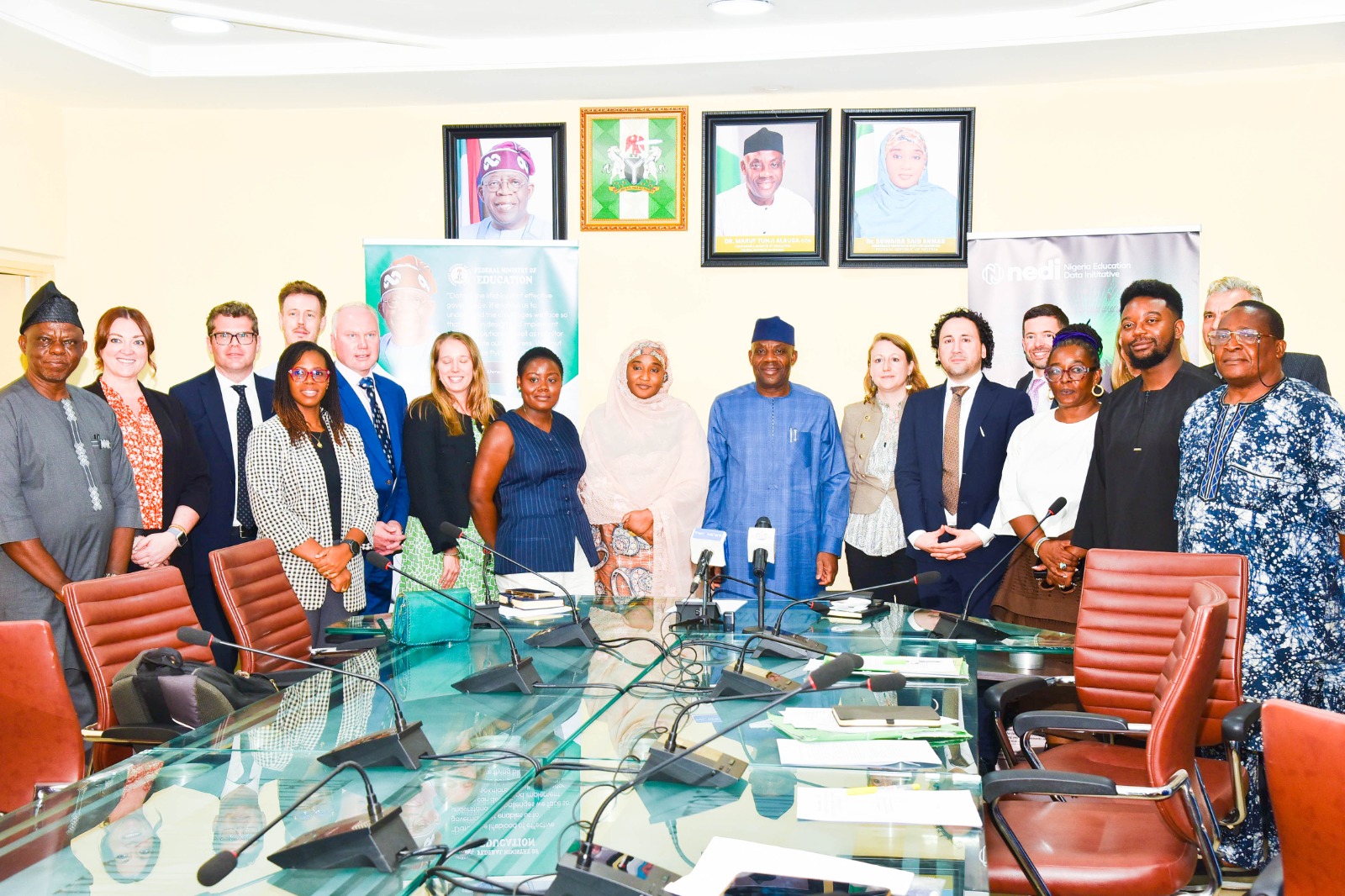
This was highlighted during a courtesy visit by a high-level Schools and Skills delegation from the UK Department for Business and Trade to the Federal Ministry of Education in Abuja.
Speaking during the engagement, the Honourable Minister of Education, Dr. Maruf Tunji Alausa, CON, stated that the Federal Government is prioritising the establishment of reputable international schools within Nigeria in order to expand access to globally competitive education while reducing the financial burden on families seeking quality education abroad.
The Minister explained that recent economic reforms, particularly the removal of foreign exchange subsidies, have made overseas education less accessible for many Nigerians. This development, he noted, reinforces the need to promote in-country delivery of world-class education through partnerships with leading global institutions.
Dr. Alausa emphasised that Nigeria’s population of over 220 million people presents a strong and growing demand for quality education. He therefore encouraged reputable international institutions, particularly British schools, to establish campuses in Nigeria, noting that cities such as Abuja, Lagos, Port Harcourt, Kano, and Kaduna present strong opportunities for investment due to rising demand.
He assured the delegation that the Federal Government is committed to creating an enabling environment for investors through policy reforms, streamlined administrative processes, and targeted support mechanisms.
Addressing concerns around security, the Minister reiterated that Nigeria remains a viable destination for investment while the government continues to strengthen safety and stability across the country.
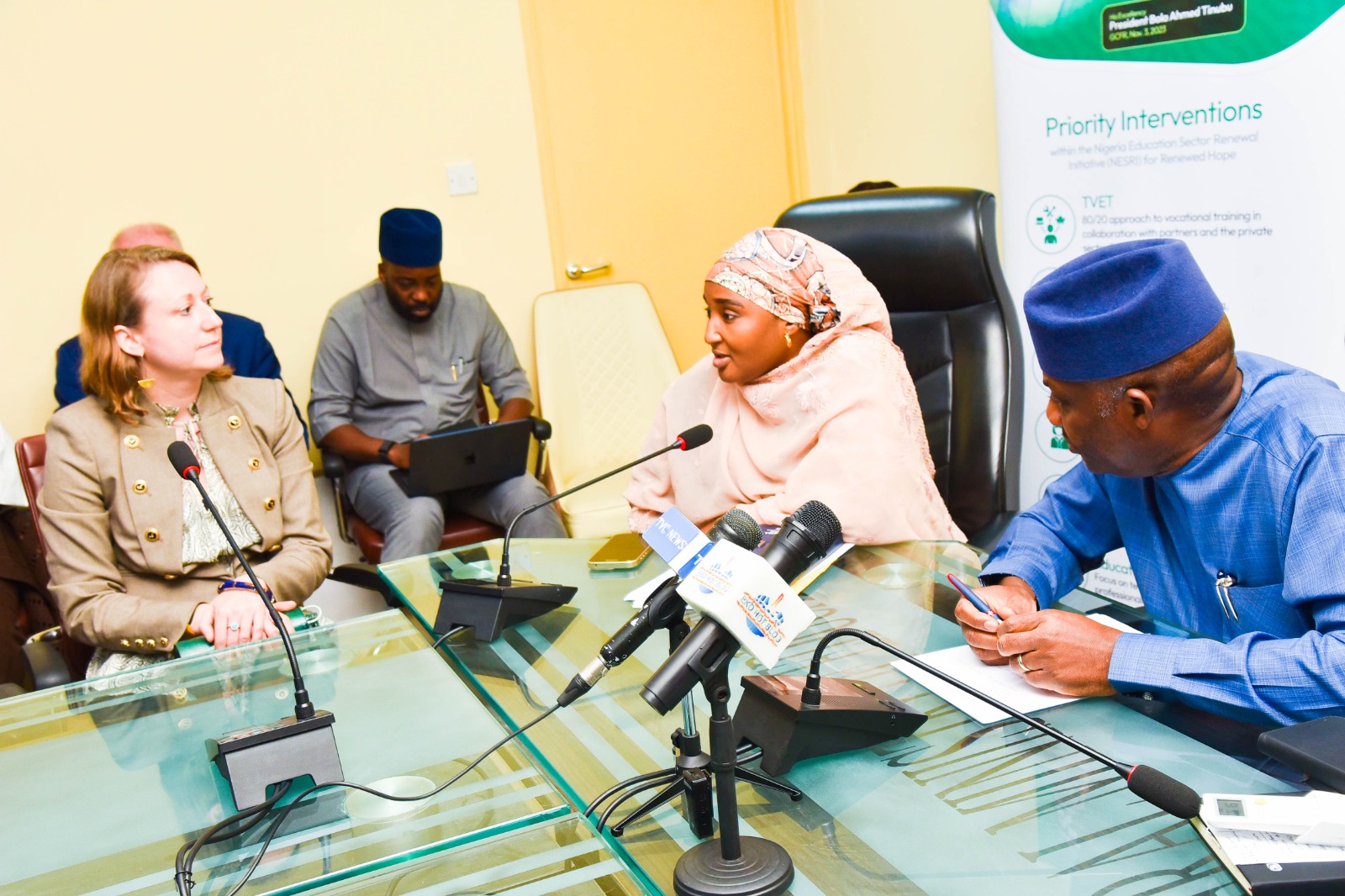
Highlighting ongoing reforms within the sector, Dr. Alausa disclosed that more than 2.5 million additional children have been enrolled in schools in the past 30 months, reflecting the government’s sustained efforts to reduce the number of out-of-school children. He also underscored the administration’s strong focus on Technical and Vocational Education and Training (TVET) as a key driver of youth empowerment, employment creation, and economic growth.
According to him, federal technical education has been made free, with stipends provided to trainees in order to encourage participation, while large-scale skills development programmes are currently engaging hundreds of thousands of young Nigerians across the country.
In her remarks, the Honourable Minister of State for Education, Prof. Suwaiba Said Ahmad, reaffirmed the Federal Government’s commitment to building sustainable international partnerships that support Nigeria’s national development priorities. She noted that expanding collaboration beyond universities to include schools and skills training is essential for building a resilient and future-ready workforce.
Also speaking, Sarah Chidgey, Head of International Education at the UK Department for Business and Trade, commended Nigeria’s ongoing education reforms and described the engagement as a continuation of strong cooperation between both countries. She noted that Nigeria remains a priority partner under the UK’s International Education Strategy and highlighted growing interest among UK institutions in establishing a presence within the Nigerian education market.
Chidgey added that recent engagements, including discussions at BETT 2026 in London, have reinforced the momentum for deeper collaboration, particularly in areas such as school-level partnerships, teacher development, and skills training initiatives.
The engagement reflects a6 strategic shift in Nigeria–UK education relations, from a traditional focus on higher education to a broader partnership encompassing basic education, curriculum development, teacher training, and skills-to-employment pathways. Both countries are expected to advance targeted initiatives that will strengthen capacity, attract investment, and position Nigeria as a leading hub for international education in Africa.
Boriowo Folasade
Director, Press and Public Relations