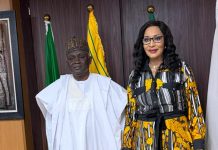


As part of efforts to strengthen food safety, improve livestock product standards, and enhance Nigeria’s export potential, the Federal Ministry of Livestock Development, in collaboration with Reo-Forte Investment Limited, organised a three-day training programme for Quality Assurance Assessors across selected livestock value chains in the Northeast geopolitical zone.
The training, which held from 6th-8th May, 2026, brought together participants from Adamawa, Bauchi, Borno, Gombe, Taraba and Yobe to build capacity in quality assurance systems, food safety compliance, traceability mechanisms, and regulatory standards within the livestock sector.
The programme featured technical presentations on livestock value chains, animal product processing and marketing, record keeping and reporting systems, food safety and hazard analysis, risk-based inspection, laboratory testing protocols, and national, regional, and international regulatory frameworks, including Nigeria and ECOWAS standards.
Declaring the training open, the Director of Quality Assurance and Certification, Dr. Nurallah Abubakar, described quality assurance as a critical component of public health, food safety, and sustainable livestock development.
“Ensuring quality is the bottom line for all our activities, especially when it concerns animal and human health. Quality assurance is critical to ensuring safe and wholesome animal protein for consumption within Nigeria and for export markets,” he said.
Dr. Abubakar explained that the training forms part of a broader national strategy to strengthen quality assurance systems and increase the number of certified assessors across the country.
“These participants will return to their respective states and train others. This is only the beginning. We will also extend the programme to other geopolitical zones to build a stronger national quality assurance system,” he stated.
He further highlighted Nigeria’s export opportunities in livestock products, particularly red meat and animal by-products, noting the growing international demand for Nigerian livestock products due to their largely natural production systems and relatively low use of veterinary drugs.
Dr. Abubakar linked the training to the implementation of the National Livestock Growth Acceleration Strategy (NL-GAS), stressing that quality assurance and certification remain fundamental to achieving productivity, food safety, market access, and export competitiveness.
“Countries in the Middle East are increasingly looking to Nigeria for quality livestock products. Our animals are naturally raised, and this places Nigeria in a strong position globally, especially at a time of growing concern over antimicrobial resistance and food safety.
“Without effective quality assurance mechanisms, we cannot achieve the desired improvements in productivity, food safety, export potential, and overall sector growth,” he said.
Earlier in his opening remarks, th cce Director of Veterinary Services, Dr. Nyalas Bartholomew, described the training as timely and strategic, noting that livestock activities across many parts of the country have operated for years with limited oversight and inadequate quality control systems.
He commended the Ministry’s leadership for introducing a structured framework for quality assurance assessment and regulation across livestock value chains, stressing that the selection of field officers for the training was deliberate and aimed at ensuring practical impact at production and processing points.
“The livestock and veterinary spaces in this country, particularly in the Northeast, have witnessed very robust activities over the years, but largely without structured quality control mechanisms, biosafety systems, or clearly enforced standards and protocols.
“We were very intentional in selecting personnel who work directly in the field because these are the people expected to ensure compliance with standards at abattoirs, poultry markets, dairy facilities, and other livestock production centres,” he stated.
Dr. Bartholomew further assured participants of the Ministry’s commitment to strengthening the legal and institutional framework necessary to support enforcement of standards and improve the competitiveness of Nigerian livestock products.
“You have the full backing of the Federal Ministry of Livestock Development. There will be legal and regulatory frameworks to support this process because our products must meet acceptable national and international standards for both domestic consumption and export,” he added.
Participants also undertook a field visit to the Jimeta Modern Abattoir to inspect facilities, assess compliance with sanitary and operational requirements, and reinforce practical knowledge on inspection systems, traceability, reporting mechanisms, and enforcement of established standards across livestock production and processing chains.
Chief Consultant in the Department of Quality Assurance and Certification at the Federal Ministry of Livestock Development, Dr. Chinwe Ezejiofor, explained that the Ministry’s broader objective is to position Nigeria’s livestock sector for improved export opportunities and increased contribution to the country’s Gross Domestic Product.
She stressed the need for abattoirs to align with international best practices to enable the country move beyond local meat consumption into the export market, thereby earning foreign exchange and strengthening the economy; adding that the inspection also served as an awareness and sensitisation exercise to encourage operators to comply with established standards and regulations.
During the experience-sharing segment, participants observed significant lapses in antimortem inspection, poor sanitation, weak record-keeping, and unsafe meat handling practices, warning that such conditions could increase the risk of disease transmission.
They recommended improved infrastructure, proper waste management, safer transportation systems, and stronger public-private partnerships to enhance operational standards and food safety compliance.
Responding, the Abattoir Manager, Dr. Joshua Mallum Shallangwa, highlighted existing facilities and ongoing improvements within the abattoir, including renovations of the slaughterhouse, construction of cold rooms, toilets, and biodigesters.
He, however, acknowledged operational challenges such as poor drainage, inadequate infrastructure, and irregular water supply.
Henrietta Okokon
Deputy Director, Information and Public Relations
8th May, 2026