


The Federal Government has commenced steps to establish a stronger and more coordinated national framework for research and innovation governance and financing, with stakeholders calling for mechanisms that will accelerate the conversion of research findings into technologies, enterprises, jobs and solutions to national challenges.
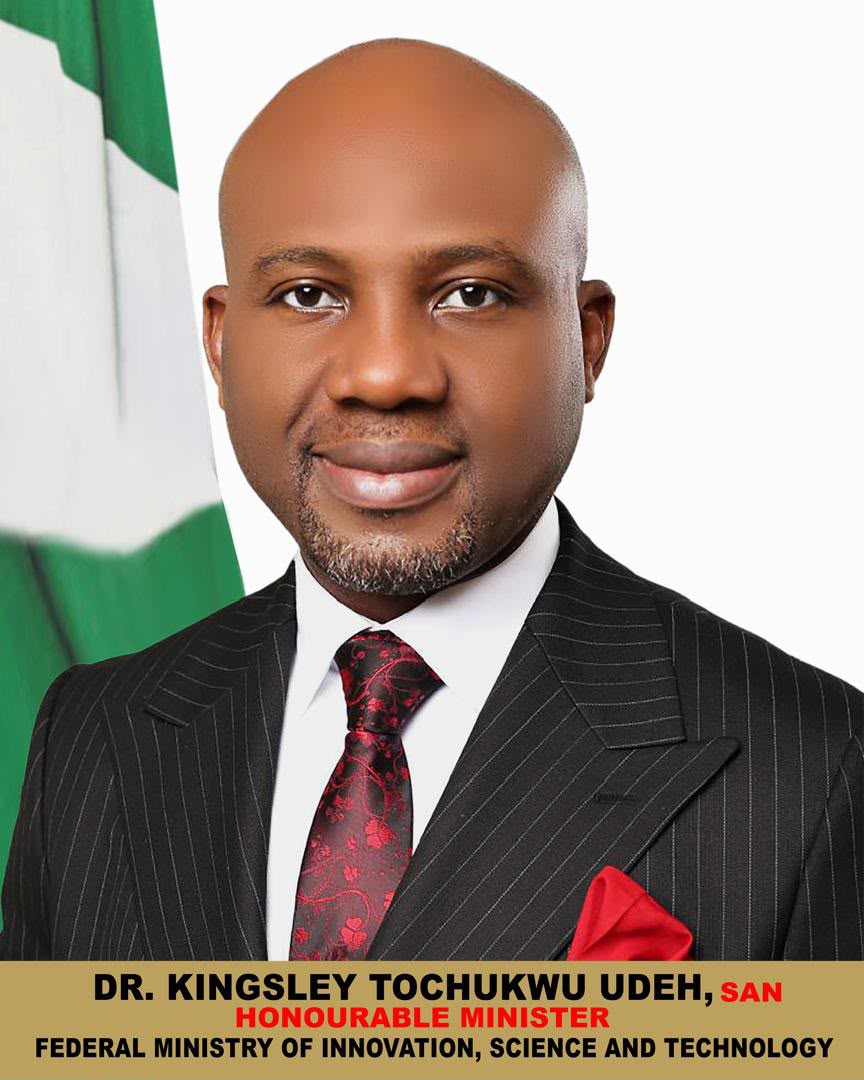
The Minister of Innovation, Science and Technology, Dr. Kingsley Tochukwu Udeh, SAN, represented by the Director-General, National Centre for Technology Management (NACETEM), Dr. Shegun Olushola, stated this in Abuja at a Stakeholder Sensitisation Workshop on the Draft Executive Bill for the establishment of the National Council on Research and Innovation (NCRI) and the National Research and Innovation Development Fund (NRIDF), organised in collaboration with the African Technology Policy Studies Network (ATPS).
The Minister said the initiative was consistent with the Renewed Hope Agenda of President Bola Ahmed Tinubu, noting that the Ministry was prioritising the use of Science, Technology and Innovation (STI) as an engine for job creation and youth entrepreneurship, the commercialisation of indigenous research and innovation, and the development of a strong national innovation ecosystem linking researchers, industry and government. He stressed that Nigeria could no longer afford to allow valuable research findings to remain on the shelves, urging stakeholders to move “from research to products, from policy to implementation, and from potential to prosperity.”
Udeh commended ATPS for its longstanding contributions to evidence-based STI policymaking across Africa, noting its work in more than 30 African countries, production of policy briefs and support for technology development, enterprises and employment. He said the Ministry regarded ATPS as a strategic policy partner in areas including the development of the National STI Roadmap, technology foresight and policy brokerage, tracking climate and innovation commitments, and empowering young people and women in science and technology.
In his opening remarks, the Permanent Secretary of the Ministry, Dr. Mukhtar Yawale Muhammad, mni, represented by the Director, Department of Environmental Science and Technology, Mr. Abubakar Takuma, said the proposed legislation represented an opportunity to strengthen Nigeria’s research and innovation architecture, improve institutional coordination and provide a more predictable financing mechanism for research, innovation, technology transfer and commercialisation. He noted that the initiative followed the Federal Executive Council approval , which included the establishment of the NRIDF under the supervision of the Ministry.
The Permanent Secretary emphasised that the effectiveness of the proposed framework would depend on clearly defined institutional roles, transparent and sustainable funding arrangements, competitive grant processes, technical and peer review, milestone-based disbursement, monitoring, evaluation, intellectual property management and technology transfer. He urged stakeholders to provide specific, evidence-based and actionable recommendations capable of making the proposed NCRI and NRIDF financially sustainable, accountable and responsive to Nigeria’s developmental priorities.
Also speaking, the Chairman, House Committee on Science, Technology and Innovation, Hon. Zakariya Tijjani Zannah, commended the Ministry and ATPS for convening the engagement, describing the proposed NCRI and NRIDF as an important opportunity to strengthen research funding, commercialisation, technology transfer and collaboration among universities, research institutions, industry and government. He recalled that the House of Representatives had passed the National Science, Technology, Innovation and Research Council (Establishment) Bill, 2023 (HB. 727) on 8th May, 2025, and assured stakeholders of the National Assembly’s commitment to providing the necessary legislative support.
The workshop brought together representatives of Ministries, Departments and Agencies, universities, research institutions, the private sector, development partners and other stakeholders to examine the Draft Executive Bill from legal, policy, scientific, technical, financial and institutional perspectives. The participants were encouraged to draw from international best practices while ensuring that the proposed framework reflects Nigeria’s realities and creates effective pathways for publicly funded research to generate intellectual property, new technologies, industrial applications, enterprises, employment and measurable economic and social value.
Pauline Sule,mnipr
Head, Press & Public Relations, FMIST