

……..Mobilises Stakeholders for Renewed Hope Infrastructure Agenda.
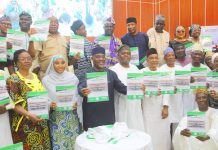
The Honourable Minister of Works, Engr. David Umahi, CON, FNSE, FNATE, has received an assessment report by the National Association of Nigerian Students (NANS) on Federal Government road infrastructure projects inspected across the North-West Zone. The report was presented to the Minister at the Ministry’s Conference Hall, Mabushi, Abuja, by the President of NANS, Comrade Akinteye Babatunde Afeez. The assessment followed a nationwide student-led inspection initiative aimed at enabling Nigerian students to obtain first-hand information on the progress, quality and relevance of Federal Government infrastructure projects.
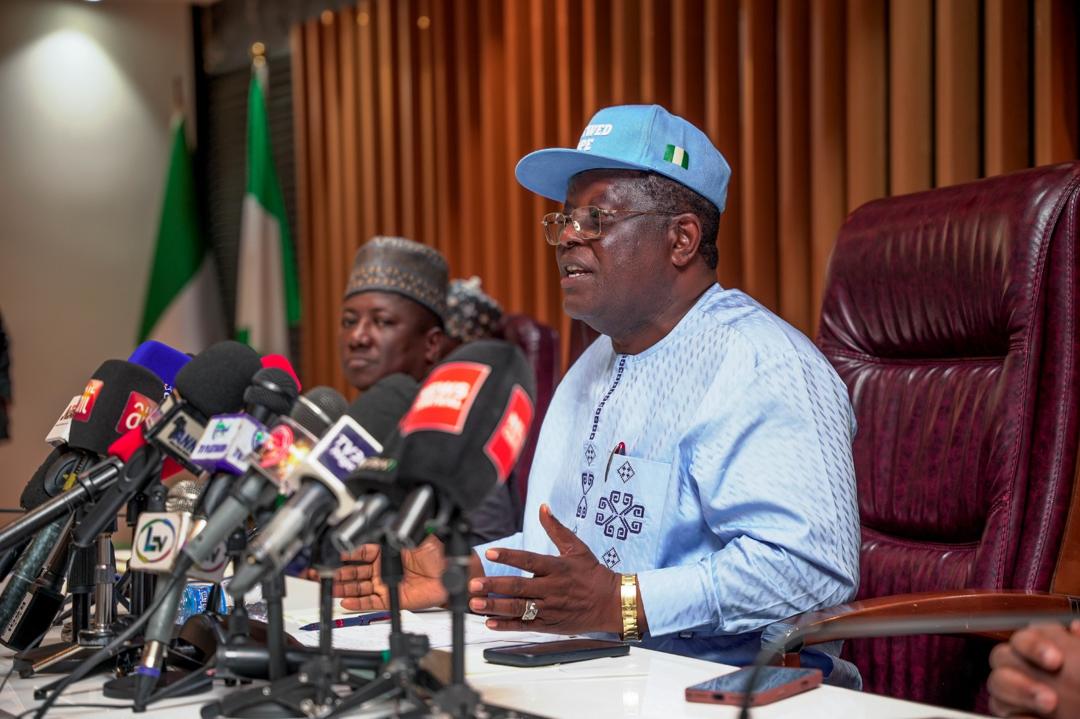
Upon receiving the report, Minister Umahi commended NANS’s leadership and the participating student representatives for embarking on the tour, describing the initiative as a responsible demonstration of youth participation in national development. He reiterated that the Federal Ministry of Works welcomes constructive assessments from students, civil society organisations and other stakeholders, noting that such engagements provide the Ministry with unbiased feedback on projects and help identify areas requiring further attention.
According to him, the Ministry has continued to open its project sites to stakeholders and independent observers to enable them to assess ongoing and completed projects and gain a better understanding of the scope, quality and progress of work being undertaken by the Renewed Hope Administration of His Excellency, President Bola Ahmed Tinubu, GCFR.
Engr. Umahi assured that the Ministry would carefully study the observations and recommendations contained in the NANS report and take appropriate action, where necessary. He specifically directed relevant Directors in the Ministry to note the students’ recommendations on access roads and pedestrian safety around educational institutions, including the request for a pedestrian bridge at the Federal Cooperative College area of Kaduna.
The Minister also assured the students that their concerns regarding roads serving universities, polytechnics, colleges of education and surrounding communities would receive appropriate attention within the Ministry’s mandate. He noted that road infrastructure is critical to education, commerce, agriculture and the movement of people and goods, stressing that the Federal Government remains committed to improving connectivity across the country.
Speaking on the broader national conversation surrounding the Renewed Hope Agenda, Umahi stressed the importance of assessing government policies and their implementation through facts, projects and measurable outcomes. He also encouraged stakeholders, including state governments and citizens, to engage constructively on issues affecting their communities. He highlighted the Ministry’s community engagement, sensitisation and mobilisation structure, which is intended to showcase infrastructure projects as catalysts for national integration and development.
On the thorny subject of fuel subsidy removal and its implications for governance, the Minister underscored the need for citizens to examine how changes in government revenues and fiscal space are being reflected in public services and social interventions. Stakeholders were encouraged to engage their respective state governments on how additional revenues are being utilised for the benefit of citizens.
Engr. Umahi recognises that roads are more than engineering structures. Their condition directly affects the movement of people and agricultural produce, access to schools and healthcare facilities, transportation costs, trade, security and the wider economic life of communities.
Presenting the report, the NANS President, Comrade Akinteye Babatunde Afeez, disclosed that the students embarked on the inspection tour because they considered roads leading to educational institutions an important component of the infrastructure required to support access to education.
He said the North-West leg of the exercise covered major road projects across Kano, Kaduna, Jigawa, Katsina, Sokoto and Zamfara States. Among the projects inspected, according to NANS, were the Kano Northern Bypass; Kano–Kwanar Danja–Hadejia Road; Kano–Maiduguri Expressway; Dualisation of Kano–Katsina Road; Kaduna–Zaria–Kano Expressway; Zaria-Funtua–Gusau-Sokoto Road; Kaduna (Mando)–Birnin Gwari Road; Kaduna–Pambegwa–Jos Road; and other Federal road projects across the zone. On the Reconstruction of Kaduna (Mando)–Birnin Gwari Road, the students described the project as strategically important to interstate connectivity and access to communities and educational institutions.
Comrade Babatunde said the delegation observed that several of the roads inspected have a direct impact on students by improving access to campuses, reducing travel difficulties, and strengthening connectivity between educational institutions and surrounding communities.
He commended the quality and scale of work observed at several project sites, particularly the detailed attention given to road pavement construction, the adoption of continuous reinforced concrete pavement (CRCP) technology, drainage infrastructure, subgrade preparation, and the installation of solar-powered streetlights along selected corridors.
The NANS President, however, revealed that the students identified areas where additional interventions could further enhance the impact of some projects. Among the recommendations contained in the report was the provision of pedestrian infrastructure around educational institutions located close to major highways, as well as the construction and improvement of access roads linking some major Federal highways to citadels of learning. He stated that NANS would continue to undertake similar assessment exercises in other parts of the country and communicate its findings to the Ministry.
The Senior Special Assistants to the President (SSA-P) on Community Engagement representing the six geopolitical zones used the occasion to call on Nigerians, traditional institutions, community leaders, youth organisations and other stakeholders to support and participate in the Federal Government’s infrastructure engagement initiative. They highlighted the long-standing challenges associated with neglected road corridors across the country and noted the importance of ongoing rehabilitation, reconstruction, expansion and completion of strategic routes to improve connectivity, security and socioeconomic activities.
The Community Engagement teams are expected to serve as a bridge between the Ministry and communities by taking information about infrastructure development to the people, while bringing citizens’ observations, concerns and feedback to the Ministry’s attention. Speaking, the SSA-P, Community Engagement, North-West Zone, Abdullahi Tanko Yakasai, commended the students for visiting project sites and engaging with communities and road users.
Yakasai said the exercise provided an opportunity for the students to see ongoing infrastructure projects firsthand and communicate their observations to the Federal Government.
He commended the Federal Ministry of Works for facilitating access to the project sites and urged the students to continue providing constructive feedback on Federal Government projects across the country.
In his closing remarks, the Director Overseeing the Office of the Permanent Secretary (DOOPS), Alhaji Aminu Ahmed, commended the Minister for his commitment to the Ministry’s mandate and his sustained attention to infrastructure delivery and stakeholder engagement. He thanked the NANS delegation for the initiative and for taking the time to inspect ongoing projects. He underscored the importance of collaboration among the political leadership, career officials, technical personnel, and external stakeholders in delivering and communicating the Ministry’s mandate.
The DOOPS guaranteed the students that their observations would be handled appropriately. He commended the students for their interest in infrastructure development and their commitment to contributing to national development through on-the-spot assessment and constructive engagement.
Ultimately, the impact of road infrastructure development is measured not only in the number of kilometres constructed or rehabilitated, but also in how effectively roads improve connectivity, facilitate economic activity and ease movement for the people who depend on them. This initiative, therefore, seeks to position citizens and communities as active participants in understanding, monitoring, and communicating the impact of federal infrastructure development.
Mohammed A. Ahmed
Director, Information and Public Relations.
23 September, 2026.