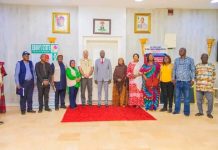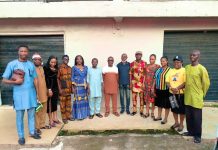



FIC Report (Edo State) – The Edo State Government, in collaboration with the World Health Organization (WHO), has intensified efforts to combat the spread of Lassa fever through sustained public awareness campaigns, community engagement, and strengthened disease prevention strategies across the state.
This commitment was reaffirmed during a courtesy visit by officials of the World Health Organization to the Government House in Benin City, where stakeholders stressed the need for proactive and community-based approaches to tackling infectious diseases.
Speaking during the engagement, the Coordinator, Office of the First Lady, Mrs. Edesili Okpebholo Anani, underscored the significance of Governor Monday Okpebholo’s SHINE Agenda, noting that the “H” in SHINE represents Healthcare, which she described as a major pillar of the administration’s development agenda.
Mrs. Anani stated that the fight against Lassa fever requires collective responsibility and sustained sensitization efforts, particularly at the grassroots level where awareness remains relatively low.


According to her, public enlightenment on the symptoms, transmission channels, and preventive measures associated with Lassa fever is critical to reducing outbreaks and protecting residents from the disease.
She emphasized the importance of maintaining proper hygiene, ensuring safe food storage, promoting environmental sanitation, and encouraging the early reporting of suspected cases to health authorities.
“We must continue to engage our people at the grassroots level and ensure they understand the dangers of Lassa fever. Prevention remains the most effective way to tackle the disease, and together we can build healthier and safer communities across Edo State,” she said.
Also speaking, the WHO State Coordinator, Nora Eyo, reaffirmed the organization’s commitment to supporting Edo State in strengthening disease prevention and outbreak control mechanisms.
Eyo noted that Edo remains one of the states frequently affected by recurrent Lassa fever outbreaks, making continuous public awareness and emergency preparedness essential.
She explained that through strategic partnerships, research, and coordinated interventions, WHO aims to support the development of effective response systems capable of reducing the spread of infectious diseases and improving community resilience.
In his remarks, the Team Lead, Risk Communication and Community Engagement–Infodemic Management (RCCE-IM), Dr. Abdulrahman Danjuma, stressed the need for multidisciplinary collaboration in disease prevention and public health communication.
Dr. Danjuma stated that effective risk management depends on providing residents with accurate and timely information that enables them to make informed decisions regarding their health and safety.


Reflecting on lessons learned from the COVID-19 Pandemic, he observed that the outbreak significantly transformed social and healthcare systems across the world.
According to him, infodemic management has become an important tool in Public health, enabling experts to monitor misinformation, collect relevant data, conduct surveys, and implement communication strategies that strengthen Community preparedness and response during outbreaks.
He further stressed the need for proper follow-up mechanisms during disease outbreaks to ensure rapid intervention and limit the spread of infections.
On the government’s response strategy, the Special Adviser on Health, Dr. Andrew Iyamu, disclosed that the Edo State Government is adopting a holistic approach involving critical Stakeholders, including the Ministry of Environment and other relevant Agencies, to enhance disease surveillance and improve outbreak response systems.
The meeting further highlighted the importance of collaboration among government institutions, International Health Organizations, Community Leaders, and Residents in building resilient Healthcare systems and safeguarding Public health across Edo State.
By Egwaoje Amarachi Linda
ACI&PRO FIC Benin
May 22nd, 2026.