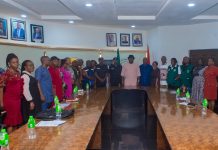


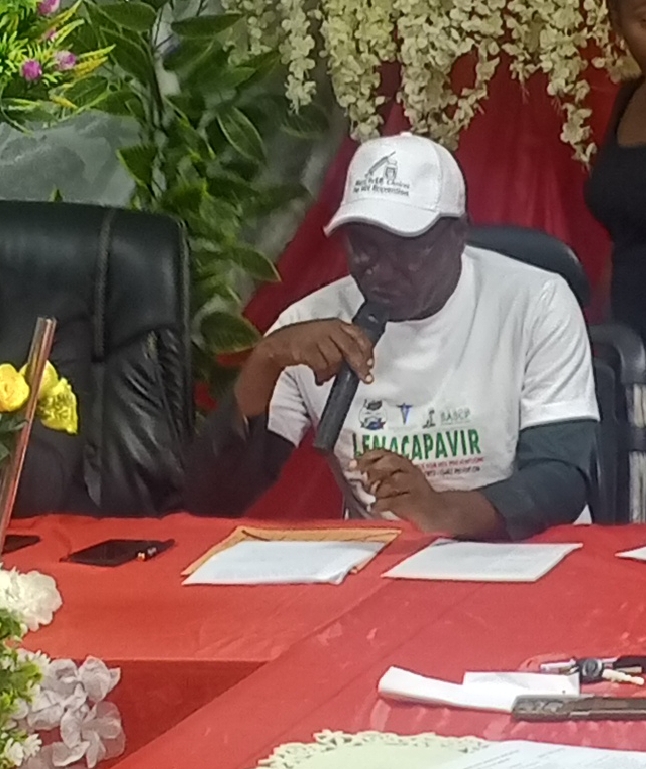
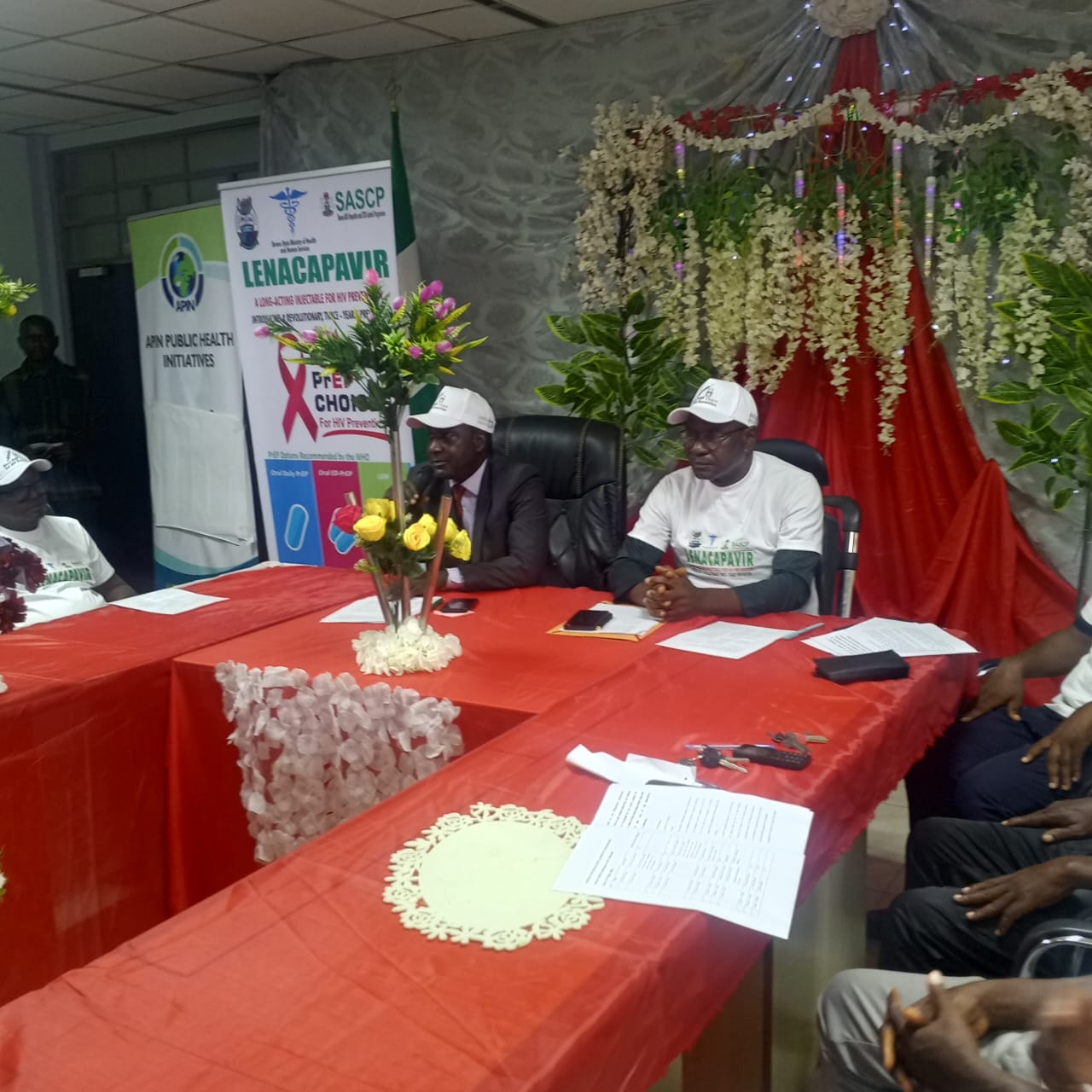
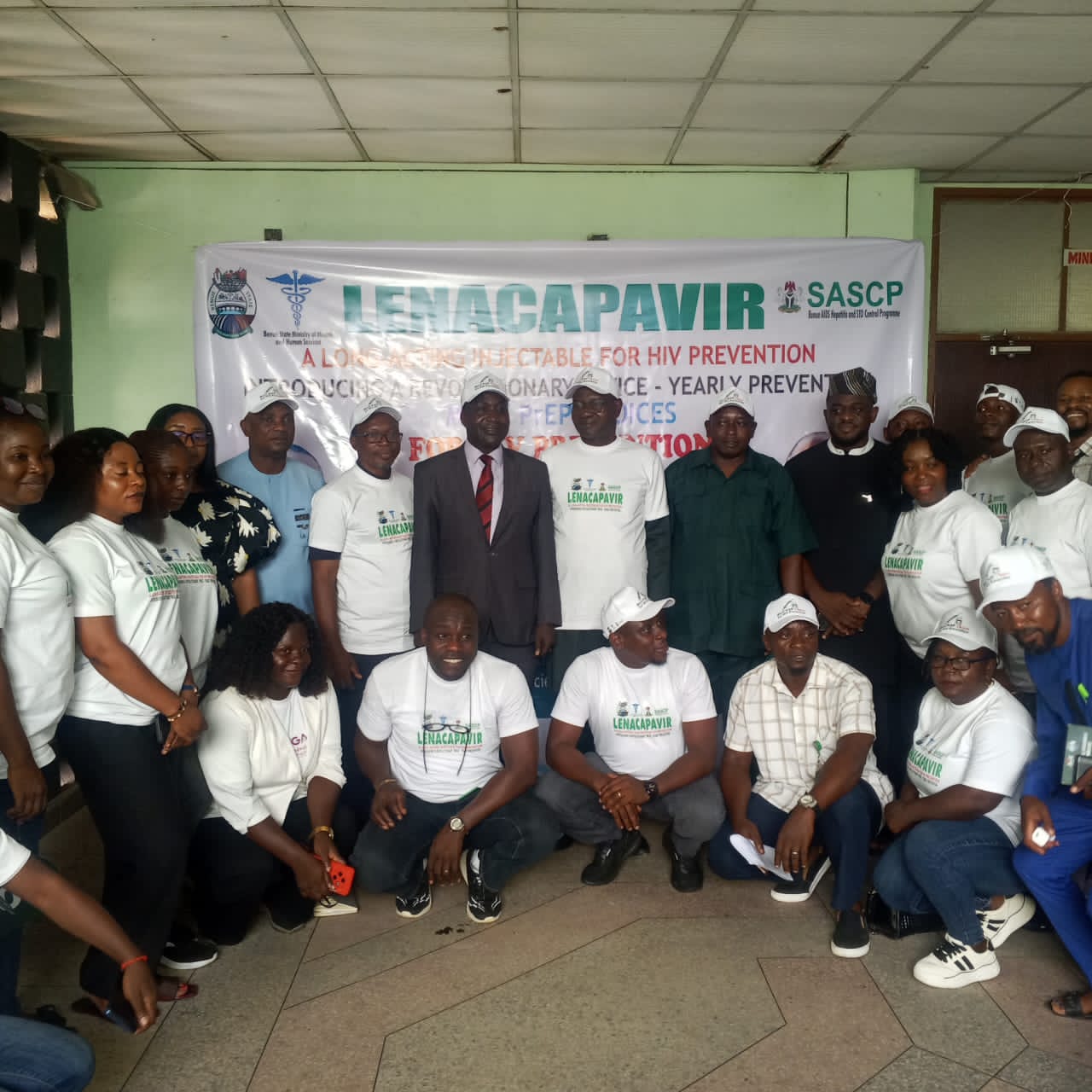
FIC Report (Benue State) – The Benue State Government has officially launched Lenacapavir (LEN), a long-acting injectable pre-exposure prophylaxis (PrEP) for HIV prevention, marking a significant milestone in the state’s public health response to HIV/AIDS.
The launch ceremony, held on Monday at the Ministry of Health Conference Hall in Makurdi, brought together government officials, development partners, healthcare professionals, and stakeholders in the health sector.
In his opening remarks, the Permanent Secretary of the Ministry of Health, Mr. Cephas Hough, described the introduction of Lenacapavir as a major step forward in the state’s sustained efforts to reduce the burden of HIV through prevention, treatment, care, and support services.
He said the introduction of the long-acting injectable demonstrated the commitment of both government and development partners to providing innovative and effective prevention options capable of improving health outcomes across the state.
Mr. Hough, while acknowledging the scientific advancement represented by Lenacapavir, stressed the continued importance of awareness creation, responsible behaviour, and sustained community education in preventing HIV transmission.
According to him, the launch represents not only the introduction of a new medication but also a renewed commitment to strengthening awareness, prevention, and collective responsibility in the fight against HIV/AIDS.
Delivering the keynote address, the Commissioner for Health and Human Services, Dr. Paul Ejeh Ogwuche, described the rollout as a historic turning point in Benue State’s HIV response.
He noted that HIV prevention efforts over the years had relied largely on daily oral PrEP, which, despite its effectiveness, often faced challenges related to adherence, stigma, and lifestyle barriers.
Dr. Ogwuche explained that Lenacapavir, administered twice yearly as an injectable, provides a discreet, convenient, and highly effective prevention option for individuals at risk of HIV infection.
Citing the Nigeria AIDS Indicator and Impact Survey (NAIIS), the Commissioner stated that Benue State’s HIV prevalence rate stands at 4.7 per cent, one of the highest in the country, underscoring the urgent need for bold and innovative interventions to protect vulnerable groups, including adolescent girls, young women, key populations, and serodiscordant couples.
Dr. Ogwuche expressed appreciation to development partners and implementing agencies whose technical support and expertise made the rollout possible.
He also commended healthcare workers and PrEP focal persons across facilities in Makurdi, Otukpo, Gboko, Aliade, and other parts of the state for their dedication to the planning and implementation process.
He outlined key priorities for the successful implementation of the programme to include:
Ensuring equitable access to Lenacapavir services in both urban and rural communities;
Promoting community-led demand creation through collaboration with civil society organisations and community networks; and
Strengthening data-driven monitoring through the State AIDS and STI Control Programme to ensure accountability and measurable impact.
He urged healthcare workers to embrace the innovation and provide compassionate counselling to clients, while also calling on the media to promote accurate and responsible reporting that would enhance public confidence and awareness.
In a goodwill message, Dr. Abdulkarim Mohammed, speaking on behalf of the World Health Organization (WHO), described the twice-yearly injectable as a major breakthrough in HIV prevention.
He said WHO now recommends Lenacapavir as an additional PrEP option, recognising its potential to transform the global HIV response by improving adherence, expanding prevention choices, and reaching people most at risk of infection.
Dr. Mohammed reaffirmed WHO’s commitment to supporting the Federal Government and the Benue State Government to ensure the safe, equitable, and rapid scale-up of the intervention alongside HIV testing, treatment, and community engagement initiatives.
Stakeholders at the event also called for sustained public education, active youth participation, and increased community engagement to ensure the success of the intervention.
Bridget Udoo Tarker
For Head of centre
FIC Makurdi