

The Federal Government of Nigeria is advancing from policy design to full-scale implementation in transforming the livestock sector, with a clear focus on delivering measurable outcomes in food security, nutrition, and economic growth.
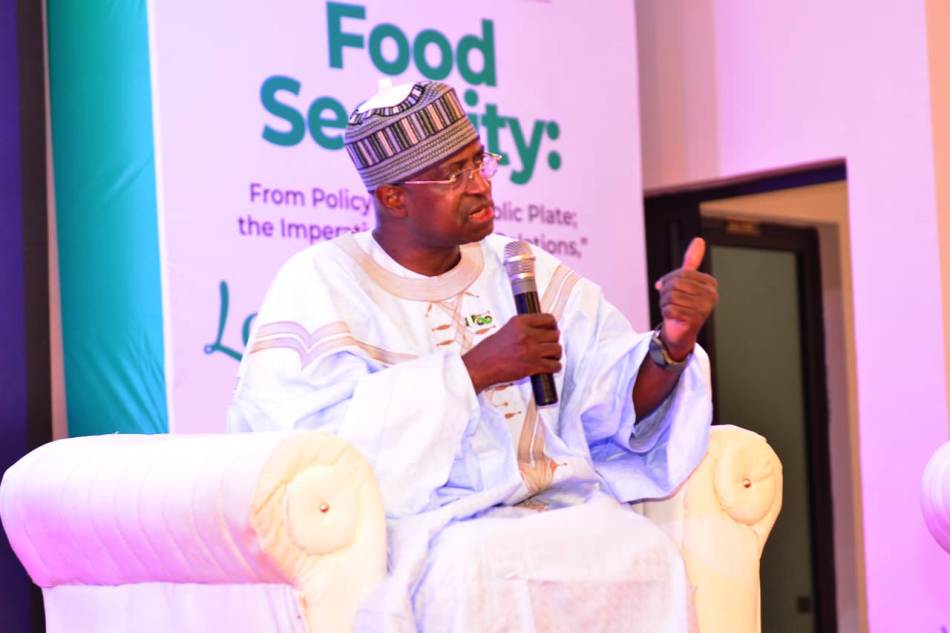
This commitment was reinforced as the Honourable Minister of Livestock Development, Idi Mukhtar Maiha, served as a panelist at the 3rd Nigeria Public Relations Week (NPRW 2026) in Kaduna, where discussions centered on translating strategy into impact across Africa’s food value chain.
The forum, which commenced on Tuesday, April 21, 2026, continued on Wednesday, April 22, at the newly commissioned Kaduna State Banquet Hall unveiled by Vice President Kashim Shettima, GCON, and brought together policymakers, communication experts, and sector leaders to examine the role of strategic communication in Food security, advancing food policy, production, and branding.
Joining the Minister on the panel were Dr. Brylyne Chitsunge, Ambassador for Food Security in Africa; Arik Karani, President of the Africa Public Relations Association (APRA) and Public Relations Society of Kenya (PRSK); and Professor Demo Kalla of the Abubakar Tafawa Balewa University.
Speaking during the session, the Minister emphasised that the creation of the Federal Ministry of Livestock Development , marked a turning point from decades of underutilised potential to a new era of structural shift to unlock the sector’s vast economic potential.
“For over 60 years, the livestock sector remained largely outside the formal economy. Today, we are taking deliberate steps to mainstream a $32 billion opportunity and translate it into real value for Nigerians,” he said.
Mukhtar noted that implementation efforts are focused on unlocking productivity across the value chain, from animal health and feeding systems to market access and value addition, with particular attention to improving access to animal-source protein.
“We are not just talking about potential anymore, we are acting to ensure that Nigerians have access to nutritionally balanced diets. The reality today is that our consumption of milk and meat remains among the lowest in Africa, and that must change,” the Minister stated.
The Minister further underscored the need to correct longstanding misconceptions about agriculture, positioning livestock as a viable, modern, and profitable enterprise capable of delivering daily economic returns.
“Livestock is not a fallback after retirement, it is one of the most sustainable and profitable ventures. In livestock, there is value creation every day; from milk to meat, from eggs to leather. It is a sector of continuous productivity,” he affirmed.
The panel session echoed a shared consensus on the urgency of moving beyond rhetoric. Drawing from her experience across the continent, Dr. Chitsunge stressed the importance of aligning policy with on-the-ground realities, particularly in areas such as disease management, feed systems, and productivity.
On his part, the President APRA highlighted the role of communication in reshaping public perception of agriculture. He noted that early education and cultural orientation are essential to repositioning agriculture, not as a fallback option, but as a viable and respected way of life.
Karani called on communication professionals to lead a deliberate shift in narrative, one that elevates farming as central to food security, economic growth, and national pride.
Reinforcing this position, Professor Kalla advocated for curriculum reforms and the integration of innovation into farming practices, noting that modern agriculture must be driven by data, research, and technological advancement.
In a key outcome of the session, the President and Chairman of the Governing Council of the Nigerian Institute of Public Relations, Ike Neliaku, announced that the Institute will establish an Agriculture and Food Security Hub, that will serve as a strategic platform for driving sustained communication, stakeholder engagement, and knowledge exchange to support food security and agricultural development efforts across Nigeria.
Henrietta Okokon,
Director, Information and Public Relations
22nd April, 2026